Friday, September 3, 2010

Welcome Freshman

Welcome to new freshman and welcome back to our returning students. Here at Steen Library the research librarians are here to help you with your resource needs. The Ask-A-Librarian desk located on the 1st floor in the Research Room (Steen Library Map) is great for walk-in research help and the phone number is 468-7299. You can also use the Ask-A-Librarian form to get help online. Subject specialty assistance is as easy as contacting your liaison contact. We are here to help you have a great and successful semester!


Tuesday, July 13, 2010

There is a new and easier way to find books at Steen Library.

On Monday, July 12th, the library rolled out a new library catalog called SteenFind. SteenFind will allow faculty, staff and students to search for books and other library materials faster and easier than before by combining the advantages of the traditional structure of library catalogs with the ease of search engines.

Check out the new catalog at http://library.sfasu.edu/find/.

SteenFind will feature patron empowerment services and we believe will greatly enhance your search for materials. Please contact me or any of the Research librarians if you have any questions or comments.

Wednesday, June 9, 2010

It's Not "What's New" but "Who's New"

In February, as a result of reorganization in the Steen Library, I was made the Instruction Coordinator for the Research and Instructional Services (RIS) department. Every member of the RIS faculty has expertise in an academic field, as well as in library and information science. While I am not a librarian, I am an educator, with a very strong background in curriculum development and research. These skills are complimentary to RIS’s mission, and I have been incorporated into several of the primary areas of the department's mission. The RIS department is eager to help provide research assistance for the SFASU community, either through an individual consultation, through library orientation and research or information literacy instruction for a class, or by answering individual questions at the Ask A Librarian desk.

As the university begins to implement its Quality Enhancement Plan for high impact student learning, RIS has begun examining its own programs which support this plan. It has had programs in place for decades to teach library skills, called by a variety of names including information literacy and research skills, but the focus has expanded to embrace changes in technology that have occurred during the last two decades. It is also changing to include a focus on the first year experience, with the goal of perhaps serving as a bridge between the freshmen high school research skills and experiences (or lack thereof) and the expectations and needs of their college professors. Over the course of the next several months, we will be researching the actual needs of our main audiences - the students and faculty of SFASU. This phase will be followed with the development and implementation of curriculum based on the results of this research.

If you need help with your research project, please contact a member of the RIS faculty.


Rhonda W. Williams
Instruction Coordinator
Research and Instructional Services
Email: williamsrw@sfasu.edu
Office: 202H Steen Library
Phone: 936-468-7260

Friday, April 23, 2010

You are now entering "The Quiet Zone"

A new Quiet Zone hits the fourth floor of Steen Library. Looking for a quiet study space away from the bustling crowds? Check out the entire fourth floor of the Steen Library which is now reserved for quiet study, free from the distractions of service desks, study groups, and cell phone conversations. Students can find a peaceful oasis with tables, study rooms, and study carrels throughout the floor. Last fall a library survey was conducted which revealed library users were unhappy with the ongoing noise levels in the library and other distracting activities that are counterproductive to individual study.

The Twilight Zone themed “Quiet Zone” was a design created by Ms. Devon Skinner a senior from Dallas, enrolled in the Illustration class taught by Aloma Marquis last fall. Quiet Zone signage will be placed on the fourth floor and furniture will be arranged in a manner conducive to individual study.

The second and third floors are available for group studying.

Success will be determined by the self-disciplined actions of library users, but any of the library service point, like the Circulation or InfoDesk, can be told about abuses. We are encouraging all library users to enjoy this new space especially during the stressful weeks ahead before finals.

Let us know what you think about the Quiet Floor or suggestions to make it better.

Susan ClarkeSusan Clarke
Head of Research and Instructional Services
sclarke@sfasu.edu
rm. 202g
(936) 468-1459

Friday, March 5, 2010

Argue like a Pro with "Opposing Viewpoints"

Opposing Viewpoints is a database that presents both sides of controversial issues. It is a good starting point for choosing a topic, getting an overview, and finding related material. The series can be useful for writing speeches and debating. "Opposing Viewpoints" links to recommended websites, so it provides some “quality control” for the Web.

To get to it, click on the Databases A - Z on the Library home page. Scroll down to the O section and click on Opposing Viewpoints.

R. Philip Reynolds
preynolds (AT) sfasu.edu
rm. 202b
936.468.1453
Subjects - Computer Science, Military Science, Philosophy, Religion, Political Science, Geography, Kinesiology

Sunday, February 14, 2010

Love is in the air.

Well, at least in the décor. It is estimated that one billion valentine cards are sent each year, making Valentine’s Day the second-largest card-selling holiday (after Christmas). But was Valentine’s Day really invented by the greeting card companies to take advantage of the love and/or friendship between two people?

Actually, Valentine’s Day was established at around 496 AD by Pope Gelasius I who named the holiday after a (some speculate several) Christian martyr named Valentine or Valentinus. No one really knows for sure who Valentine was or what he did but February was a month of romance long before the pope declared the 14th the big day. Lupercalia, an ancient Roman fertility festival, was celebrated in mid-February.

The commercial holiday that we recognize today first began in Great Britain in the seventeenth century. By the middle of the eighteenth century, it was common practice to exchange small gifts or handwritten poems on Valentine’s Day. Improvements in printing technology led to printed greeting cards in the late 1700s. By this time, the holiday had become popular in the United States. In the 1840s, Esther Howland (now known as the Mother of the Valentine) began selling the first mass-produced valentines in the country. Since then, a number of other countries in the world have created their own Valentine’s Day traditions. In Japan, it is customary for women to buy chocolates for men (usually co-workers). One month later, the men who received chocolates are expected to return the favor. In Norfolk, England “Jack” Valentine leaves treats for children on the back step of the house. In Finland and Estonia the holiday is more about celebrating friends rather than lovers.

How do you spend your Valentine’s Day? Some people use this opportunity to show their loved ones how much they care; others use it to show how much they’re willing to spend. Some people go out and have a romantic dinner; others go on a romantic weekend getaway. But if you’re like me, you prefer to spend the day relaxing at home without roses, heart-shaped boxes, and pink teddy bears. While I do intend to spend some quality time with my significant other, I plan on spending the greater part of the day the same way I spend every Sunday – cozily bundled up in blankets with a good read. Incidentally, the book I’ll be reading this Sunday is the seventh installment of Diana Gabaldon’s Outlander series – a series about love that transcends time.

But Erica, shouldn’t you be doing more on Valentine’s Day to show that special someone how much you care? Well, what can I say? At the risk of sounding ooey-gooey, I must say that I hardly feel the need for a big to-do this Sunday. After all, every day is Valentine’s Day in our home.

Outlander, by Diana Gabaldon
At a whopping 656 pages, Outlander may appear daunting at first but if you’re into adventure, historical fiction, and love stories, the time will fly.

https://rwsteen2.sfasu.edu/uhtbin/cgisirsi/0/0/0/5?searchdata1=9780440212560

Research Library Liaison - Erica Lopez

Email: z_lopezer@titan.sfasu.edu
Phone: (936) 468-6270
Office: 202j

Wednesday, January 20, 2010

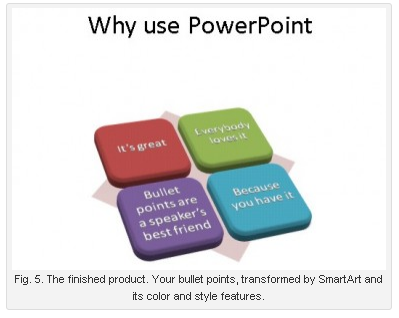
Tech Talk -- Bullet Points, Begone!!!!!

A great website about using technology in producing assignments for classes is http://libtechtalk.wordpress.com/ created by librarians at the University of Michigan. One of the tips they offer is how to get rid of boring bulletpoints in Powerpoint presentations even though you want to make sure your important points are noticed by the Prof.

I also found this trick simply by mistake as I was playing around with Microsoft features. After I created what I wanted, then I forgot how I did it! Here are the steps that will help you.

"Now, thanks to the help of PowerPoint’s “SmartArt Graphics”, you can easily turn your mundane bullet points into visually stunning gems of knowledge.
Here’s how…
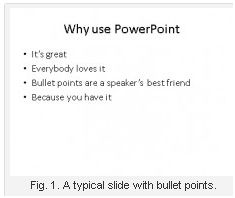
1. Make your list, like you always do. (Go ahead, admit it.) Check out my mundane slide in Figure 1 if you need inspiration.

2. Select the text box that contains your bullet points.
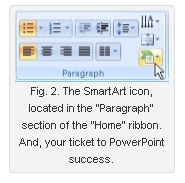
3. Click the SmartArt icon in the “Paragraph” section of the “Home” ribbon.


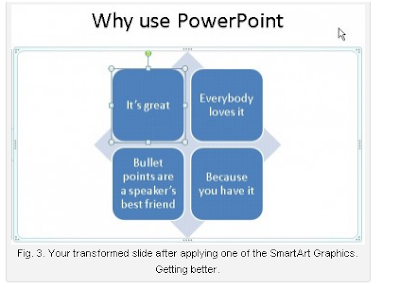
4. Choose your preferred SmartArt graphic (hint: hovering over a particular SmartArt graphic will give you a preview of your transformed bullet points).

It’s better, but you’re not done yet!
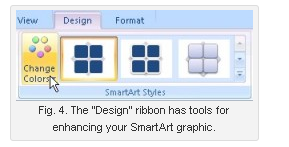
Next, with the SmartArt version of your bullet points selected (make sure you choose the whole graphic rather than just part of it), click on the “Design” ribbon.


From here, you can change the colors and the style of your SmartArt graphic. Your B&W bullet points seem light years away now!"


Thank you Librarytechtalk.

Marthea Turnage
mturnage@sfasu.edu
rm. 202c
936.468.1896
Subjects - Accounting, Criminal Justice, Economics and Finance, General Business, Law, Management/Marketing/International Business, Nursing, Psychology

Friday, December 4, 2009

What to do When “No” is the Wrong Answer

Sometimes while doing some online research the database you are using will return no hits. You may see a message saying:

“No matches found”

“No records matched your search”

“No results were found”

This can be frustrating when you need the right answer, right article, or just the right book. Fortunately, there are a few of quick steps you can take when “No….” is the wrong answer.

First, check your spelling, most of the time when a database can’t find anything matching your query it is because you misspelled something. While Steen Library does not currently have any books on kenisiology it does have several about kinesiology. With Google You can find almost 3500 web pages about kenisiology, you might want use one of the 930,000 or so pages Google returns for kinesiology.

If you are still getting no hits on your search your next step is to make sure you are using the right database. When doing online research the axiom “use the right tool for the right job” holds true. If you want to find a book in Steen Library, use the library’s catalog. If you need a journal article, use a “General Database” or “Subject Database” listed on one of the library’s “Subject Guides.” If you need a web site check the “Websites” section of one of the Subject Guides, or use a search engine like Google, Yahoo, or Bing.

Next, make sure you are using the right terminology. Many times when searching refereed or scholarly journals searchers will use different terms than those used in the discipline. While you may tell someone you broke your collarbone, you would probably want to find the latest treatment methods by searching for articles about a broken clavicle.

Of course, you can always Ask A Librarian. Whether you Ask A Librarian at the beginning so you can get the information you need faster, or wait and ask as a last resort, the librarians at Steen Library are ready to help.

R. Philip Reynolds
preynolds (AT) sfasu.edu
rm. 202b
936.468.1453
Subjects - Computer Science, Military Science, Philosophy, Religion, Political Science, Geography, Kinesiology


Related Posts:
RIS Recommends: Find a 4 Letter Word in the Library: HELP!
RIS Recommends: Quick Tips for Searching

Monday, November 2, 2009

Burn This Book

Burn This Book: PEN Writers Speak Out on the Power of the Word, edited by Toni Morrison

Burn This Book has been chosen as the NetLibrary Book of the Month for October in acknowledgment of Banned Books Week (26 September – 3 October). Banned Books Week is an annual celebration of our First Amendment rights and our freedom to access information through reading.

Burn This Book is a collection of essays by prominent literary artists who discuss the importance of expressing ideas from various social and/or political viewpoints free from the fear of censorship. Emphasis is placed on both the importance of writing about real situations and the difference that writing can make. Contributors to Burn This Book include Toni Morrison, Salman Rushdie, Orhan Pamuk, David Grossman, and others.

This book is a must-have for librarians, teachers, and aspiring writers! Burn This Book will be available for free through NetLibrary until October 31, 2009 so be sure to take a look!
To Access NetLibrary via Steen Library you should first go to the Steen Library home page at:
http://libweb.sfasu.edu then click on the Databases A-Z list on the left side of the page.

Once the database page appears click on the letter N or scroll down the list of databases until you arrive at the listing for Net Library.


Off campus, users will need to access NetLibrary and the library website via mySFA to gain access. After ther first visit to NetLibrary users can set up a personal account that will allow them to access NetLibrary anytime they are off campus without going through mySFA.

Other posts about Net Library on the RIS Recommends Blog include:


The Naked Roommate by Tina Oswald
eAudiobooks,NetLibrary and You by Kayce Halstead
SFA Internet Books by Bernice Wright

Erica Lopez
z_lopezer@titan.sfasu.edu
rm. 202j
(936) 468-6270
Subjects - Anatomy & Physiology, Astronomy, Biology, Botany, Chemistry, Geology, Limnology, Math/Statistics, Microbiology, Physics, Zoology

Sunday, September 13, 2009

Reading, Writing and RECON : Military Professional Reading Lists

Roughly stated RECON is a mission to obtain information about an adversary, or the characteristics of an area. Today military professionals must know more about their profession and the world they live in, than ever before. For many gathering this information includes books, both electronic and digital. All branches of the military have recommended and/or required reading lists. The Combined Arms Research Library (CARL) at Fort Leavenworth, has one of the better-maintained list of these lists on the web. Their page of Military Professional Reading Lists links to more than twenty-five different lists. However, between the five branches of the military, their schools, commands, and civilian government the number of lists is almost impossible to enumerate.

As part of
Steen library's collection development efforts, librarians will often use tools such as bibliographies and professional reading lists when purchasing materials to support learning, instruction, and research at SFA. For Military Science, the library has made a specific effort to acquire all of the books on "The U.S. Army Chief of Staff's Professional Reading List." (2004, this list has been superseded by the U.S. Army Center for Military History Professional Reading List) In addition many other titles from other military reading lists are part of the library collection. In an effort to make locating the hundreds of titles available at Steen Library from several of these lists, I recently created a spreadsheet this information and posted it on the web. The page "Combined Military Professional Reading List" provides easy access to titles owned by the library from many different lists. Links to some of the official lists are on the "List of Lists" page of the spreadsheet. The library owns almost all the titles from "The U.S. Army Chief of Staff's Professional Reading List", as well as many or most of the titles found on other reading lists. Through inter-library loan any additional titles not currently owned by Steen Library are readily available to the SFA community.

If you would like to
recommend a favorite title or list of titles for Steen Library, contact your reference librarian.


R. Philip Reynolds
preynolds (AT) sfasu.edu
rm. 202b
936.468.1453
Subjects - Computer Science, Military Science, Philosophy, Religion, Political Science, Geography, Kinesiology

Monday, August 24, 2009

The Naked Roommate

The Naked Roommate: and 107 Other Issues You Might Run Into at College 3rd ed., by Harlan Cohen.

“What an interesting title for a book!” That is what I thought when I saw it listed as the NetLibrary Book of the Month for July. (For information on NetLibrary and how to use it, see below.) This book contains all the information a new college student needs to be able to survive and thrive, during that confusing and challenging first year of college. Your parents will claim that, “I wish I had that information before I went to college.” However, don’t discount the book due to that statement!! There is good information here with funny stories and vignettes to complement the information being given. There are chapters on everything from dorm life to finances. Great information like: always were flip-flops in the community bathrooms, and the fact that you will do better in your classes if you actually go to class! So, go to NetLibrary and see what the book is all about. You may decide that you need a paper copy of this title, either for yourself, or your younger sibling or a friend.

Tina Oswald, Research Librarian

NetLibrary is one of the databases the Steen Library subscribes to and is actually a collection of e-books. Yes, you can get there easily! Follow these steps:

Go to the Library Home Page and click on Databases A – Z.


At the Databases page, click on “N”, or scroll down to the “N” section.


Click on NetLibrary, and you are there!!


Tina Oswald
toswald@sfasu.edu
rm. 202f
936.468.1861
Subjects - Elementary Education, and Secondary Education/Educational Leadership

Saturday, July 25, 2009

"The sky is falling! The sky is falling!" Licensing, Fair Use, and Copyright.

In June of 2009Brigham Young University's Harold B. Lee Library, discontinued a short-lived pilot project wherein the library provided inter-library loan services to faculty using Amazon's Kindle. Roger Layton, communications manager for the library said.
"We are pretty fast on the interlibrary loans, but it still takes days....With the Kindle, we can have a new book available for someone in a matter of minutes.

http://www.deseretnews.com/article/705310939/BYU-suspends-Kindle-program-over-legal-concerns.html

while this incident caused a bit of a stir in the library community it could have quietly faded into obscurity if Amazon had left well enough alone. Instead around July 14th of this year Amazon "began e-mailing a few hundred owners of its Kindle reading device to explain that it had deleted electronic copies of the George Orwell's "Animal Farm" and "1984" and had refunded the $0.99 purchase price." according to a
recent article posted at Information Week's website. http://www.informationweek.com/news/personal_tech/drm/showArticle.jhtml?articleID=218501227

Until now many saw no significant difference between purchasing copyrighted material and purchasing a license to use copyrighted material, despite the fact that almost every piece of software we use or "purchase" has for years been made available under a license agreement. People who bought a Kindle became painfully aware of the difference between buying a book and paying for a license to use a book.

Well So What?

Why should we care? Amazon gave refunds for the EBooks and said they "will no longer delete books in this manner." (Read apolofy from Amazon founder and CEO Jeff Bezos) Amazon and other corporations may have the best interest of their customers at heart for the moment there is no guarantee that this will last. By lisenceing access to digital versions of a book or magazine, companies can circumvent or even eliminate consumers' rights of "fair use" and "first sale." The Kindle manual states "Digital content will be deemed licensed to you under this Agreement". The manual also states that "Amazon reserves the right to modify, suspend, or discontinue the Service at any time, and Amazon will not be liable to you should it exercise such right." (Amazon Kindle: Liscence Agreement and Terms of Use)So they can take back any EBook at anytime without any liability. Would this agreement stand up in court, or in the marketplace? It is hard to say, but the same types of licensing agreements have stood up in court for years in regards to software and End-User Liscense Agreements or EULAs. It is becoming an increasing concern in regards to music and movies purchased and managed by Digital Rights Management (DRM) software. (see the Computer & Communications Industry Association web site on defending fair use http://www.defendfairuse.org/index.html)

If this was just about Amazon and the Kindle then there would be no problem, people could just stop buying Kindles if they didn't like the licensing agreement. However, it is not just about Amazon. How much of our reading, research, watching movies, and listening to music do we do online or with our computers? If a company could license our access to all or most of our information, they could control, or at least exert an unprecideneted influence over what we could and could not read, hear or see through a EULA.

Google's Terms of Service
Your relationship with Google

  • Whenever you use our services it’s under the terms of a legal contract with Google.
  • This contract is made up of the Terms of Use and the Legal Notices for the services you’re using.
  • We will make any additional Legal Notices available to you when you sign up for the service concerned so you’ll know they apply.
  • If you misbehave, we may terminate our agreement with you. This might result in your access to some or all of our services being disabled. Don’t say you weren’t warned.
  • We may also decide to stop providing services to you. While we don’t plan to discontinue any service, we reserve the right to.
  • You can terminate your agreement with us at any time by closing your account for the services you use. We’ll be sorry to see you go, but you can come back anytime!....
About Google’s services
  • We are constantly changing and improving our services. If you’re scared of change, this isn’t the place for you....

http://www.google.com/accounts/tos/highlights/utos-us-en-h.html

Fair use and copyright law does not appear to apply in regards to the Kindle, Google, Google Scholar, Google Books, or almost any information accessed with a computer. Think about how much of your work, study, entertainment, and research you do through the use of Google, or any computer software (including operating systems). What would happen if Google, Apple, or Microsoft decided to "terminate our agreement with you. This might result in your access to some or all of our services being disabled...." "We may also decide to stop providing services to you. While we don’t plan to discontinue any service, we reserve the right to."

Now it all of a sudden is not about whether you want to buy a Kindle, its about your access to almost any information that at some time may be stored on a computer. While Google's current corporate philosophy includes the idea of "do no evil" is comforting, it could easily change."We are constantly changing and improving our services. If you’re scared of change, this isn’t the place for you...." Google's definition of "evil" is suddenly relevant to almost everyone whose life is touched by a computer. http://www.google.com/corporate/tenthings.html

Is the sky falling?

No, but you might want to think about licensing the use of an umbrella.

R. Philip Reynolds
preynolds (AT) sfasu.edu
rm. 202b
936.468.1453
Subjects - Computer Science, Military Science, Philosophy, Religion, Political Science, Geography, Kinesiology

RIS Recommends: The Color of Money: Fair Use and Copyright or: Free the Bound Periodicals!